English| EUR
Suggested for you
More currencies
Choose a language
La Rioja sits 120 kilometers south of Bilbao, close enough for a day trip yet far enough that route choice and timing matter. The drive crosses the Basque uplands into wine country proper, with arrival windows and seasonal traffic shaping how long the journey takes. This guide lays out the distance, the roads that cover it, and what to expect along the way.
Quick answer
The distance from Bilbao to Rioja wine region is approximately 120 kilometers to Haro, the first major wine town, and 125 kilometers to Logroño, the regional capital. By car the journey takes 75 to 90 minutes depending on your destination within La Rioja and traffic conditions. The AP-68 motorway is the fastest route, while the N-124 offers a slower, more scenic alternative through smaller villages and hillside vineyards.
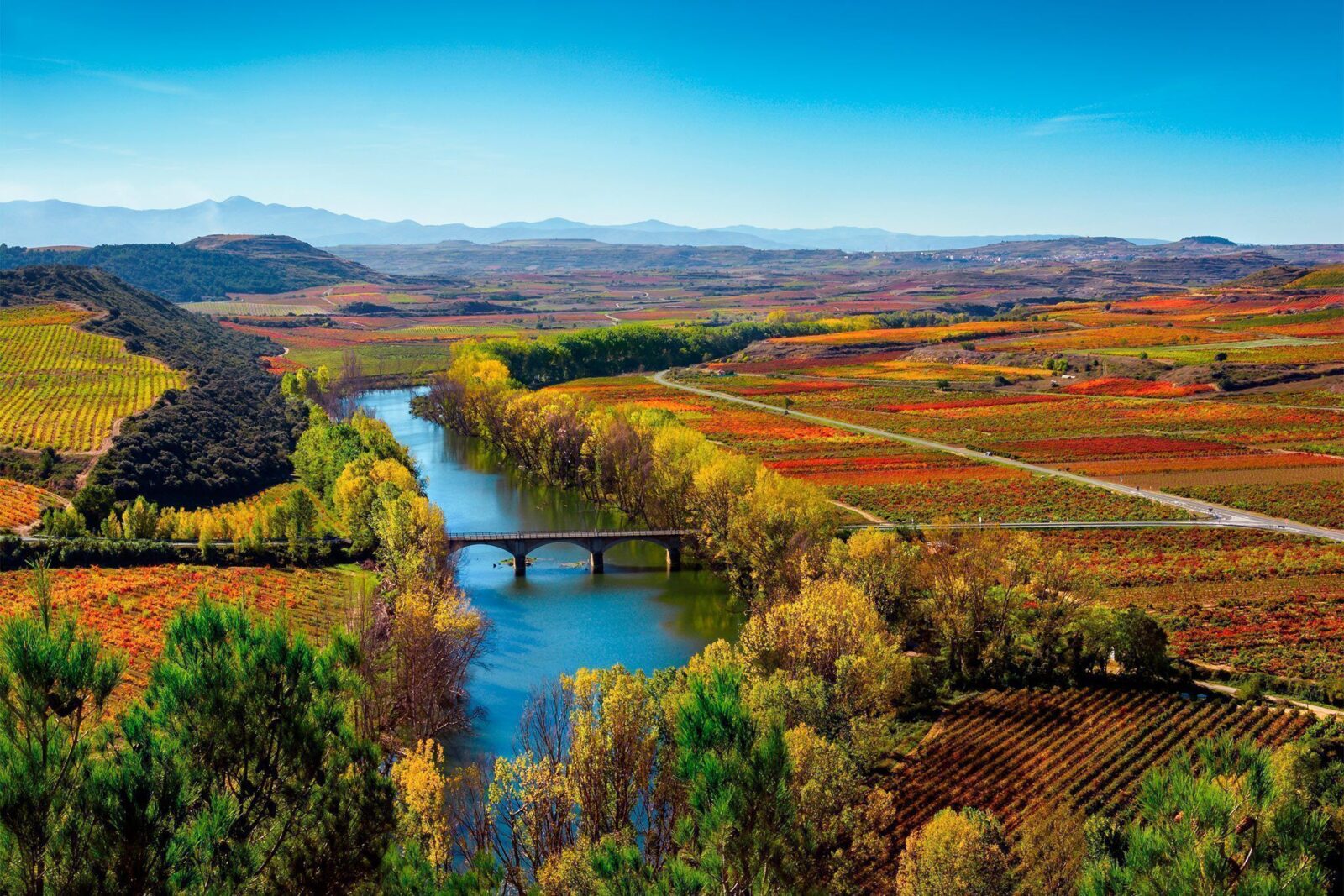
La Rioja begins where the Basque hills flatten into the Ebro valley, a transition visible from the highway as green slopes give way to ordered rows of vines. The distance from Bilbao to Rioja wine region spans roughly 120 kilometers, but the region itself stretches over 100 kilometers east to west, so your exact destination determines both route and drive time. Haro, the heart of Rioja Alta and home to century-old bodegas, lies closest to Bilbao. Logroño, the administrative and cultural hub, sits five kilometers further. Laguardia, perched on a hilltop in Rioja Alavesa, requires a detour north from the main motorway but rewards the effort with medieval architecture and underground cellars carved into limestone. Most visitors follow the AP-68 toll motorway south from Bilbao, a direct corridor that cuts travel time but bypasses smaller towns. The alternative N-124 route adds twenty minutes but threads through Vitoria-Gasteiz and the wine villages of Rioja Alavesa, offering glimpses of the landscape that produces Tempranillo and Garnacha. Both roads are well maintained year-round, though autumn harvest traffic and winter fog in the Ebro basin occasionally slow the pace. The drive itself is straightforward, with clear signage in Spanish and Basque once you leave the Bilbao metro area. La Rioja operates as a free-access wine region rather than a gated attraction, so there is no single entrance fee or checkpoint. Individual wineries set their own hours and tasting charges, typically ranging from ten to thirty euros per person depending on the cellar's prestige and the tour length. The best arrival window falls between 09:00 and 18:00, when most bodegas accept visitors and daylight enhances both vineyard views and village exploration. Morning departures from Bilbao allow time for a winery tour before lunch, while afternoon returns benefit from softer light across the vines. The Bilbao to La Rioja corridor has carried wine north and Basque commerce south for centuries, and the road still reflects that exchange. Modern highways have shortened the journey, but the distance remains just long enough to feel like a shift in landscape and pace. Whether your goal is a single premium tasting in Haro or a full day moving between appellations, the 120-kilometer span is manageable as a round trip yet substantial enough to warrant planning around meal breaks and seasonal daylight.
“La Rioja begins where the Basque hills flatten into the Ebro valley, a transition visible from the highway as green slopes give way to ordered rows of vines.”
The Rioja wine region is located approximately 115 kilometers southeast of Bilbao. Reaching the area is most efficiently accomplished by car via the AP-68 motorway.
AP-68 motorway from Bilbao toward Logroño
Autobuses Jiménez from Bilbao Intermodal to Logroño
Renting a car provides the necessary flexibility to navigate between the dispersed vineyards and wineries throughout the region. Visitors planning their logistics should prioritize arriving during the best arrival window of 09:00–18:00 to maximize daylight hours for cellar visits.
The optimal window for traveling from Bilbao to the La Rioja wine region is during the shoulder seasons of spring and autumn, specifically targeting mid-week mornings to maximize daylight and winery access. Arriving within the best arrival window of 09:00–18:00 ensures sufficient time to navigate the route and experience the vineyards during peak operational hours.
Mild to warm, 18°C–25°C
Vines are lush and green during these months. The weather is favorable for regional travel and outdoor vineyard tours.
Mild, 15°C–22°C
This period aligns with the grape harvest, known as the Vendimia. It is a busy but culturally significant time to visit.
—
Traveling between Tuesday and Thursday minimizes congestion on the route. It provides quieter access to wineries and clearer traffic conditions for the drive.
Verdict: The best time to travel is Tuesday through Thursday during the months of May, June, or October, aiming for an arrival between 09:00 and 18:00.
This framework suits day-trippers and overnight visitors who want to balance vineyard time with realistic travel. The round trip from Bilbao takes roughly 2.5 hours of driving, leaving 5-6 hours in the region itself.
Leave early to reach Haro or Logroño by 10:30, allowing time to settle in before the first winery opens. Most bodegas require advance booking for tours.
Arrive at your first booked bodega for a guided tour and tasting, typically 90 minutes. Haro's Barrio de la Estación clusters several historic cellars within walking distance.
Stop in the town center for tapas or a seated meal; Logroño's Calle Laurel is known for pinchos. Allow 60-90 minutes to avoid rushing back on the road.
Visit another bodega or explore a wine village like Laguardia, perched on a hilltop with medieval streets. This slot can flex depending on your afternoon booking.
Aim to leave La Rioja by early evening to avoid driving after dark, especially on winding rural roads. You'll arrive back in Bilbao around 18:30.
Access to the La Rioja region is free of charge. Costs for visitors typically involve transportation between Bilbao and the region, as well as specific fees for winery tours and tastings.
Verdict: Adults pay 0 EUR to enter the region, with total costs depending solely on the specific wineries and transport options selected.
The La Rioja region is accessible throughout the week, allowing flexibility when planning the travel distance from Bilbao. Wineries operate on individual schedules within these general hours.
Everything you need to know about distance from bilbao to rioja wine region
The distance from Bilbao to Rioja wine region is approximately 100 to 120 kilometers depending on your specific destination in the Ebro Valley. Most visitors drive south through the scenic Basque mountains to reach this famous viticulture area.
Travel time covering the distance from Bilbao to Rioja wine region typically takes between 1 hour and 30 minutes to 2 hours by car. Traffic conditions and your specific winery destination within the DOCa Rioja can influence this duration.
There is a 0 EUR entrance fee for the region itself, as it is a public territory. Individual wineries set their own costs for private tours and tastings.
The best arrival window is 09:00–18:00 to ensure you have sufficient daylight for vineyard tours and tastings. This schedule allows for a productive visit before winery operations conclude for the day.
While regional buses connect Bilbao to major towns like Logroño or Haro, the distance from Bilbao to Rioja wine region is most efficiently managed via private vehicle or pre-arranged tour. Public transport may require additional local transfers to reach specific vineyard locations.
When planning a day trip, the distance from Bilbao to Rioja wine region is quite manageable for an excursion. Many travelers opt to depart early to maximize their time exploring the local cellars and historical architecture.